Will America’s democratic institutions survive Trump?
As unrest spreads, researchers and lecturers at universities are doing what they can to keep activities running as normally as possible. In laboratories and lecture halls, it’s business as usual. But the disruptions are mounting. What are faculty thinking about their situation—now, in the near future, and in the longer term? How are the students doing?
In a series of articles funded by the Fritt Ord Foundation, The University Newspaper and Uniforum will visit a number of universities in the United States this fall. We report on the situation as it is experienced on the ground.
This campus
once bustled with every kind of activity. These days, the well-kept lawns, seen
through the iron fence, have an air of solemn quiet. Outsiders are barred from
entering, except on guided tours, where visitors are herded politely by university
staff.
Columbia
University has a long — and for many, proud — tradition of protest against
government policy, from anti-Vietnam to anti-Israel-in-Gaza. After Hamas’s
atrocities on October 7, 2023, and Israel’s subsequent invasion of Gaza,
student-led protests erupted across campus. As the demonstrations gathered
momentum, the Gaza Solidarity Encampment was established. University president
Minouche Shafik called in the police to dismantle the camp.
The
students came back, occupying Hamilton Hall. The NYPD was called in again — and
again. More than a hundred students were arrested before the protests were
finally squelched.
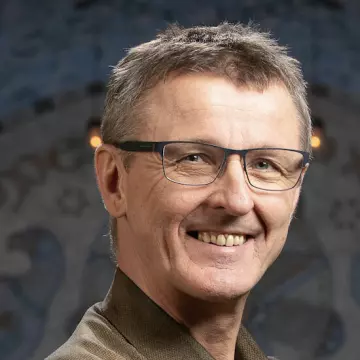
- Columbia genuinely wants to remain open and inclusive, professor Janet Metcalfe insists. Still, the gate behind her remain locked for outsiders.Photo: Tore Oksholen
Meanwhile,
Shafik was summoned before Congress, where she faced harsh questioning from
Republican committee members. Eventually, she resigned. Her successor, Claire
Shipman, later struck a deal with the Trump administration — a move widely seen
as Columbia’s capitulation.
Fakta
Janet Metcalfe
Professor of Psychology and Neurobiology and Behavior at Columbia University.
She is a fellow of the Psychonomic Society as well as the Association for Psychological Science and is currently a member of the Psychonomic Society’s Governing Board.
Metcalfe has worked in many areas of human learning and memory, metacognition and control processes.
She developed the 'Hot/Cool' model of Delay of Gratification and willpower.
Current research centers on how people know what they know, that is, their metacognitive abilities, and whether they use this evolutionarily unique ability efficaciously--for effective self-control.
- It
felt like extortion
- Except Columbia didn’t really cave, says Janet
Metcalfe, professor of psychology at Columbia. She meets us at a café just outside
the locked gate — outsiders are no longer allowed onto campus.
Her
analysis of the cave / not cave question is tinged with ambivalence.
- The one
thing Columbia did was pay a sort of fine — two hundred million dollars — for reasons
no one really understands. It seemed like sheer extortion. We had to pay $200
million to get $400 million worth of grants that had been frozen. This would have been devastating for long-term research programs, had Columbia not made a deal. It was outrageous, she says.
Shipman and
the board of trustees made a deal with the government to pay the money.
- Though
I’ve never seen any justification for it. It was like protection money paid to
gangsters — or like getting mugged on the subway. Columbia got mugged, handed
Trump $200 million, and then he left us alone.
Still, Metcalfe
rejects the idea that her university bent the knee to MAGA.
- Actually we change much, aside from paying a lot of money for no apparent reason. We still teach what we want, hire who we want, accept the students we want, and do the academic reviews we want.
But the press evaluation of it was that Columbia caved, she admits.
- The appearance of caving hurt us, and also hurt the defense of academic freedom and free speech.
Not being seen as having caved would have been better all around.
- There’s a
lot of subterfuge in how the whole thing was handled. It was never stated that
we had done anything wrong. The government needed to look like it got a win,
and Columbia helped them save face, Metcalfe says.
- We’re
muted
Something
has changed, she admits.
Professor Metcalfe tries to talk UAs reporter through the gate - to no avail.Photo: Tore Oksholen
- We’re
muted. There’s a chilling effect. On the one hand, academics are outspoken — we
speak our minds and stand up for what we believe. But on the other hand, when
you’re told that using one word will get you in trouble while another won’t,
you start choosing carefully. That’s the chilling effect.
She
mentions the Massad incident, where the tenured professor Joseph Massad faced
severe backlash after writing an essay in Electronic Intifada describing the
October 7 attacks as «awesome,» «astounding,» and «incredible,» calling them «a
stunning victory.»
- It was
seen as support for Hamas, but what he actually meant was, how could such a
small group possibly overcome Israel’s massive security? It was ambiguous, but
it was interpreted as him cheering for Hamas.
Columbia came
under strong Republican pressure to dismiss him.
- So Shafik
told Congress they were investigating Massad, that he was being censured —
which violates free speech. The faculty was furious. He’s a distinguished,
tenured professor — you can’t just throw a tenured academic under the bus.
Whether he
was actually punished, or only made to look like he was, remains unclear. Even
so, Professor Metcalfe expresses hope for the new
administration’s backbone.
A pro-Palestinian demonstration at Columbia University in New York, April 29, 2024. The University president asked the police to remove the demonstrators and their tents soon after.BING GUAN
A
chilling message
- I actually think that ’the deal’ and ‘bending the knee’, not cancel culture, is what is sending a chilling message to everyone, she says
when asked about ‘cancel culture’ on campus.
- Though the Trump administration might want to exempt conservatives from feeling chilled, she adds.
- Black, Hispanic, Chinese — any of the people we want to attract in our diverse,
international community — might feel intimidated. It makes people careful. I think that a lot of people, perhaps justifiably, are feeling guarded.
Professor Metcalfe thinks one of the greatest attractions of New York City, and Columbia with it, has long been that everybody has their own unique origins, culture, history, idiosyncrasies, preferences, beliefs, talents and background to contribute to the fascinating complexity of the city.
- There’s so much difference that everybody can be whomever they happen to be. It’s rough to see any expression of this diversity stifled.
She insists
Columbia genuinely wants to remain open and inclusive.
- We want
to be welcoming to international scholars — we have so many of them. We’re in
New York, the most international city in the world, and Columbia thrives on
that. To have this chill settle over us — it feels terrible.
The
interview ends. Professor Metcalfe walks us back to the gate and tries,
unsuccessfully, to talk the guards into letting us in. Only faculty and
students with proper ID are allowed through.S
As we part,
professor Janet Metcalfe concedes:
- We really
need some victories. Harvard stood firm — they didn’t cave, and they’re not
known as having caved. Columbia, on the other hand, thought, we can’t risk a
billion dollars in ongoing research. So we paid lip service. The faculty wasn’t
happy about that — we wanted to be brave. But on the other hand, you don’t want
to lose the research. It’s complicated.