Denne artikkelen er publisert både på norsk og engelsk. Den norske versjonen finner du her.
Fakta
Academia vs. Trump
Will America’s democratic institutions survive Trump?
As unrest spreads, researchers and lecturers at universities are doing what they can to keep activities running as normally as possible. In laboratories and lecture halls, it’s business as usual. But the disruptions are mounting. What are faculty thinking about their situation—now, in the near future, and in the longer term? How are the students doing?
In a series of articles funded by the Fritt Ord Foundation, The University Newspaper and Uniforum will visit a number of universities in the United States this fall. We report on the situation as it is experienced on the ground.
- Professor Schacter, how do you think this
situation is going to unfold?
- There are several important questions. What
can we do? What should we do? And what’s under our control? What's not under
our control? A lot of these questions come up again and again, professor
Schacter says.
There was a mass termination by the government,
of Harvard federal grants back in the middle of May, affected the long time
Harvard professor significantly.
- I have a longstanding grant from the National
Institute of Mental Health going on 25 years that has supported work in my lab
on the brain and memory, broadly construed. And this grant is one of the grants
that was terminated, he explains.
After a hearing in a federal court, the grants
were restored. Professor Schacter’s were among them.
- Of course, we don't know how long that will
last. The government's going to probably appeal. So again, there's just this
element of uncertainty about how we proceed, he says.
This unnerving uncertainty is what troubles him
the most, in particular when it comes to the future of his students.
- Probably the main thing I'm concerned about
is that a lot of the young people coming into our field, graduate students,
postdoctoral fellows, are they going to be discouraged by what they see, and
thus not pursue a career in science, he asks.
Everybody is trying to figure out how long is
this going to last, the Harvard professor explains, what exactly are the
consequences in general going to be, not just for Harvard in particular, but
for all universities. As of this moment, he deems those initial proposed cuts
are not going to be reality. Still, he worries how this is going to affect
young people coming into the field.
- It's hard enough to forge a career in
scientific research under normal circumstances, and when there's all this
uncertainty with respect to federal support, that just makes the situation
worse.
Accordingly, people who want to make a career
in research are at least raising questions about how viable that's going to be.
- I know of examples of people who are looking
outside the United States, moving elsewhere where there might be more support.
So those are the bigger issues that concern me, he says.
Fakta
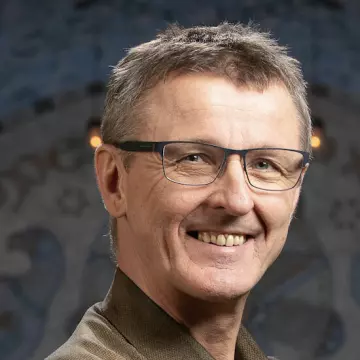
Daniel Schacter
He is a William R. Keenan Jr. endowed professor of psychology at Harvard.
Schacter’s research is broadly concerned with understanding the nature and function of human memory, using cognitive, neuropsychological, and neuroimaging approaches.
He is especially interested in understanding the constructive nature of memory: why it is that memory is not always accurate, and how memory distortions can provide important insights into the working of memory.
Garber has done a good job
- What do you think of how Harvard’s president
Alan Garber has handled the situation with mounting pressure as well as direct financial
attacks from the federal government?
- I think he has handled a very difficult
situation pretty well. There were outside forces proposing to tell us who we
can hire and what we should teach. That obviously is not a palatable situation
for any university, really. I think Garber's done a good job in terms of not
capitulating to these demands.
- If the attacks continue after the midterm
elections next year, what will happen then, will he be able to hold the line?
- I wish I could answer that question. That's
above my pay grade. It is, though, a widely shared feeling that there is a red
line that you can't cross in terms of concessions that one would make,
professor Schacter comments.
Not the first time things look grim
Still, he reminds, academia has experienced recurring
periods of mounting problems.
- I got my PhD in 1981, so I've been around for
a while. There have always been periodic challenges or times when it seemed
like things were looking really grim.
Professor Schacter remembers the early to
mid-90s, there was talk of labs closing because funding had gotten so difficult
in the early to mid-90s. But then by the end of the 90s, things were up and
going again. Then came the financial crisis in 2008. That too passed.
- Are you counting on waiting this out, for
things to go back to normal?
- Waiting it out is probably a little too
passive, at least for me. But on the other hand, we've got to focus on getting
our work done. Keep our eye on the ball.
- That is not what I do
- You've been at Harvard for many years before
Garber's time. To what extent do you agree with the critics of how free speech
at campus has been taken care of, with cancellation culture and the like?
- I, as a faculty member here for 34 years,
have never felt inhibited in what I could say. However, my views are mostly
about scientific issues. Still, I think there may be a misconception in the
outside that all faculty members are somehow in their classrooms trying to
enlist students in some political ideology. I can tell you that in 34 years of
teaching here, you could ask the question, how often have I ever raised
political issues or tried to enlist students in some kind of political
ideology? And the answer would be none. That's just not what I do.
In his daily work, professor Schacter focuses
on for the students to have a time at Harvard as normal as possible.
- We want for our graduate students to have the
same kind of experience as we had when we were students, he says.
- Do you talk to your students about the
present issues, how concerned are they?
- Graduate students, people who are in my lab,
they're concerned, for the reasons we've discussed. The uncertainty. Are things
changing in a fundamental way so that the opportunities and the funding that
we've had for people in our field, will they be there in the future? They worry,
says professor Daniel Schacter.