DION warns: Extension Changes May Weaken Representation
Outgoing DION president Xiaoran Gao says that NTNU’s halved compensation will make it harder for temporary researchers to take on a representative role on behalf of their colleagues.
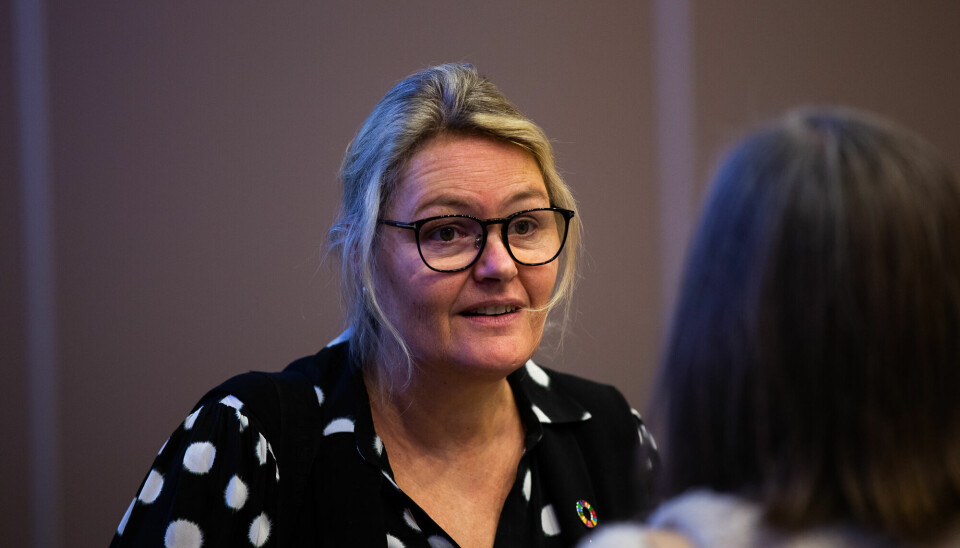
Outgoing DION president, Xiaoran Gao, warns that NTNU’s reduced contract extensions may make it harder to recruit board members and could weaken DION’s capacity to represent temporary scientific staff.Foto: Benedikt Erikstad Javorovic
At the beginning of the new year, a new board will take charge of DION, the interest organisation for PhD candidates, postdoctoral researchers and other temporary scientific employees at NTNU.Shrabanti Kundu was recently elected as the new president and will replace Xiaoran Gao at the head of the organisation.
Less attractive to take on a position in DION
At the same time, a new board has been elected, five people in total. Outgoing DION president Gao says she is grateful that they are willing to step up, but adds that there is also reason for concern.
DION has eight board positions, but only five were filled this year, including two board members continuing from 2025.
- The DION board has been affected by NTNU’s new contract extension rules, and the extensions will be halved starting with the next board, she says.
Shrabanti Kundu is a PhD candidate in the Department of Computer Science at NTNU Gjøvik and the new leader of DION.Foto: Kai T. Dragland / NTNU
As DION president over the past year, she has been compensated through a two-month extension of her PhD contract, while the vice president and other board members have received a one-month extension.
The board taking office in the new year will receive only half of that. Kundu, who will take over as president, will receive just one month, while the new board members will receive two weeks.
The reason is changes in NTNU’s guidelines for recruitment positions.
These were adopted by the rector and introduced at the beginning of 2025. It is only now that they are having an effect on DION’s leadership. See the rectorate’s response further down in the article.
Gao points out that temporary scientific employees are often early in their careers and face heavy pressure, while also having to deliver on publications, coursework and completion.
- The reduced compensation makes it harder to justify taking on additional responsibilities, she says.
Gao emphasises that DION, since it was established in 1996 with NTNU’s support, has worked on a wide range of issues affecting temporary scientific staff.
She says the board was informed that contract extensions might be reduced, and therefore began documenting working hours and preparing reports.
-We have now received final confirmation that the halved compensation scheme will take effect from 2026, she says.
Advised the new board to scale down
Gao believes the situation weakens DION’s long-term capacity and its ability to represent temporary employees.
- With the limited number of board members for 2026, we have advised the incoming board to scale down activities to ensure a manageable workload alongside their research, she says.
DION functions both as an interest organisation for rights and working conditions, and as a social arena.
- As DION president in 2025, I find the situation worrying, and I hope increased awareness can contribute to a discussion about how DION can be better supported going forward, Gao says.
This is the new board of Dion.Foto: NTNU/Dion
- Natural to review the arrangement
Pro-Rector for Research and Innovation Toril A. Nagelhus Hernes says compensation in the form of contract extensions for elected roles was originally introduced to make it easier for PhD candidates to take on such positions, and later expanded to include postdoctoral researchers.
- In the new regulation under the Universities and Colleges Act, duty work has been replaced by what is termed ‘career-enhancing work’, and it was therefore natural to review the arrangement. The regulation covers the right to leave and extension for central leadership roles, but NTNU has chosen to continue compensation also for roles at faculty and institute level, as well as for DION positions.
Wanted to harmonise compensation
Pro-Rector Toril Nagelhus Hernes says that, in principle, the compensation should be aligned with how other time spent on career-enhancing work is calculated.Foto: Espen Halvorsen Bjørgan
Hernes says compensation should be based on norms or actual time spent.
- A faculty board with four to five meetings a year may amount to roughly two weeks of work when you include preparations. With more frequent meetings or multiple roles, it is possible to receive more than two weeks, but this must be based on documentation, she says.
She notes that representatives at institute and faculty level previously received two weeks of extension, while DION members received one month.
- To create more equal arrangements, the compensation for DION has been harmonised with the institute and faculty level, she says.
The guidelines entered into force on 1 January 2025. Since the DION board for 2025 had already been elected, they were allowed to keep the old arrangement, while the newly elected board will receive compensation under the new guidelines.
- Participation happens primarily in everyday work
Hernes argues that elected roles provide valuable experience and networks, and that a couple of weeks of extension should not be decisive for motivation.
- In the new guidelines, we encourage sharing tasks so that the workload becomes manageable, she says.
She adds that NTNU’s leadership values DION’s work through social and academic events, and that NTNU can consult the organisation.
- At the same time, participation for each individual primarily takes place in everyday work, through the supervisory line, development dialogues and staff meetings. Temporary employees also have elected representatives at institute, faculty and institutional levels, and the follow-up of the ARK working environment survey will be an important arena for participation this spring, she says.